Acoustic PET Panels 101: Sound Control Meets Custom Design
Noisy open-plan offices, echo-heavy meeting rooms, and restaurants with too much ambient sound all share the same fix. Here is what acoustic PET panels are, where to use them, and how to add branding to the same surface.
What Acoustic PET Panels Actually Are
Acoustic PET panels are sound-absorbing panels made from compressed polyester fibre (often recycled), designed to reduce echo and reverberation in a room without the bulk or look of traditional foam acoustic treatment. Because the panel surface can be printed on, they double as a design element: a custom pattern, brand colours, or a logo, all while doing real acoustic work.
Why Rooms Need Acoustic Treatment
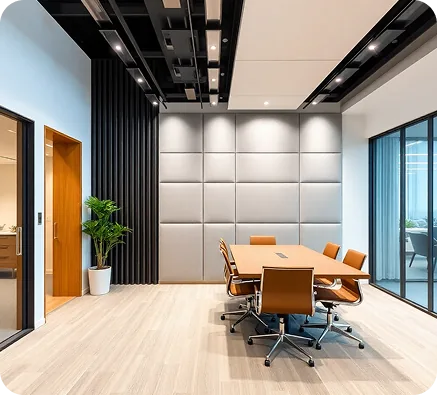
Hard surfaces -- glass, concrete, tile, drywall -- reflect sound rather than absorbing it, which is why open-plan offices, restaurants, and studios often feel noisy or echo-heavy even when they are not crowded. Acoustic panels absorb sound energy instead of reflecting it, cutting down reverberation and making conversation and calls noticeably easier.
Where Acoustic PET Panels Get Used
| Space | Common Placement | Goal |
|---|---|---|
| Open-Plan Offices | Ceiling baffles, wall panels near workstations | Reduce call and conversation noise |
| Meeting Rooms | Wall panels | Improve speech clarity, reduce echo |
| Restaurants & Cafes | Ceiling and feature walls | Comfortable ambient noise level |
| Recording & Podcast Studios | Wall coverage | Control reverberation for recording quality |
| Reception Areas | Feature wall | Acoustic comfort plus branding |
Custom Printing on Acoustic Panels
Because the panel face accepts print, the same surface solving a noise problem can carry a logo, a pattern, or a full custom design -- effectively combining a functional fix with an office branding element rather than treating them as two separate purchases.
Choosing Panel Thickness and Coverage
- Light echo in a small meeting room? A modest number of panels on one or two walls is often enough.
- Noticeable noise in an open-plan office? Ceiling baffles combined with wall panels near noisy zones give the best result.
- Recording or podcast use? More extensive wall coverage is usually needed to control reverberation properly.
- Not sure how much you need? Share the room dimensions and current noise complaint, and we can recommend a coverage plan.
Installation
PET panels are lightweight and typically mount directly to walls or ceilings with standard fixings, making installation straightforward without major construction work. See our acoustic PET panels service page for material and printing options, or browse installed examples.
FAQ( 01 )
They are made from compressed polyester fibre, often recycled, pressed into rigid panels that absorb sound rather than reflecting it.
Yes, the panel surface accepts custom printing, so the same panel that reduces noise can also carry a brand pattern, colour, or logo.
They provide genuine acoustic absorption. The printed surface is a design bonus on top of real sound-absorbing performance, not a substitute for it.
Ceiling baffles combined with wall panels near the noisiest zones, such as call areas or high-traffic walkways, typically give the best noise reduction.
No, PET panels are lightweight and mount with standard fixings, so installation is usually quick and does not require major construction work.
Share your room dimensions and the noise issue you are experiencing, and we can recommend an appropriate coverage plan rather than guessing at a quantity.