Canvas & Fine Art Photo Printing: A Giclée Printing Guide
A photograph or artwork printed on canvas can transform a bare office lobby, a living room wall, or a photographer's portfolio piece — but not every "canvas print" is made the same way. Giclée (pronounced zhee-KLAY) printing uses fine-art-grade pigment inks and high-resolution inkjet technology to reproduce images with a depth of colour and a lifespan that ordinary digital prints don't match. For businesses and homeowners across Bangalore considering large wall art, understanding how giclée printing actually works — and where it's worth paying more for — makes the difference between a print that looks good for a season and one that holds its colour for decades.
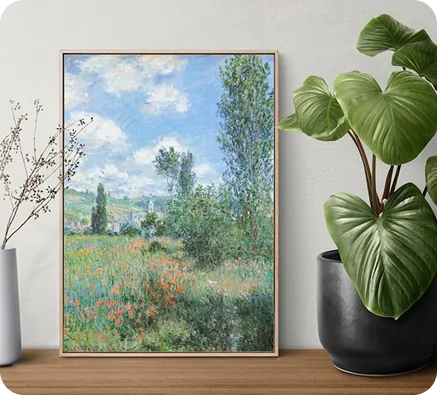
What Is Giclée Canvas and Fine Art Printing?
The word giclée comes from the French verb gicler, meaning "to spray," a nod to how fine-art inkjet printers deposit microscopic droplets of pigment-based ink onto a substrate. Unlike a standard desktop or lab print, a giclée print uses archival pigment inks and runs on wide-format inkjet systems capable of very fine droplet control and an extended colour gamut — often using more than the standard four process colours to render smoother gradients and richer blacks. The result is a reproduction that can capture subtle tonal detail from an original photograph or painting with far greater accuracy than a mass-market print.
How Giclée Differs From Standard Photo Prints
The core difference is ink chemistry. Standard photo prints — whether from a photo lab's chemical (silver halide) process or a basic inkjet printer — generally use dye-based inks that soak into the paper's fibres. Dye inks produce vivid colour initially but are more prone to fading and colour-shifting under UV exposure and humidity. Giclée prints use pigment-based inks, where colour particles sit on the surface of the paper or canvas rather than absorbing into it. This gives pigment prints a wider colour gamut, better resistance to fading, and — on canvas or textured fine-art paper — a tactile quality that flat photo paper doesn't have. Independent testing bodies such as Wilhelm Imaging Research have rated well-made pigment prints displayed under glass, indoors, and away from direct UV at roughly 100 to 200 years before noticeable fading, compared to a span of a few years to a few decades for typical dye-based prints under similar conditions. These figures represent laboratory accelerated-aging estimates under ideal display conditions, not a guarantee for every print and environment.
Canvas, Paper and Finishing Options
Fine-art reproduction work typically uses one of two substrates: acid-free cotton-rag fine art paper (often in the 200–300 gsm range, available in matte, lustre, or metallic finishes) or poly-cotton art canvas, which adds visible texture and a painterly feel. Finishing choices matter as much as the substrate:
- Gallery wrap: canvas is stretched over wooden bars so the image wraps around the edges, needing no frame — a clean, modern look favoured for lobbies and homes.
- Stretched canvas with a floater frame: similar to gallery wrap but set inside a thin frame that leaves a shadow gap around the edges.
- Rolled or flat canvas: printed and shipped unstretched, useful when the client wants to have it stretched or framed locally, or needs it for shipping.
- Mounted fine-art paper: face-mounted to acid-free board for a rigid, frameless museum-style presentation, or traditionally framed behind UV-filtering glass or acrylic for extra protection.
Large-format print providers in Bangalore, including Dazzle Creations, produce canvas and photo-quality output on HP latex and UV roll-to-roll presses and can pair it with finishing add-ons such as mounting, lamination, and stretching rather than leaving a client to source each step separately.
Getting the Resolution Right for Large Prints
A common worry with large prints is pixelation, but the resolution needed depends heavily on viewing distance, not just print size. Industry guidelines commonly used for large-format output put a practical range of around 100–150 DPI at full output size as sufficient for posters and wall art viewed from several feet away, with signage and banners viewed from farther back needing even less — sometimes as low as 75–100 DPI. The reasoning is simple: the human eye can only resolve so much detail per inch at a given distance, so a six-foot-wide canvas meant to be viewed from across a room doesn't need the 300 DPI expected of a print held in the hand. That said, the source file still has to hold enough genuine pixel data — stretching a low-resolution phone photo to fill a large canvas by upscaling software will soften detail and introduce artifacts no matter how good the printer is.
Where Canvas and Fine Art Prints Are Used in Bangalore
Canvas and fine-art prints show up anywhere a space needs a polished, photographic, or artistic focal point rather than a purely functional sign. Common applications include home décor and statement wall art, corporate lobby and reception art for offices in areas like Koramangala, Indiranagar, Whitefield, HSR Layout, Electronic City, Marathahalli, and Domlur, photography studios reproducing client portraits or wedding shoots at large sizes, boutique hotels and cafés wanting curated wall displays, and artists or galleries producing limited-edition reproductions of original paintings.
Pros, Cons and Buying Considerations
The main advantages of giclée canvas and fine-art printing are colour accuracy, a wider gamut and smoother tonal range, better fade resistance over time, and the option to add texture or a gallery-style finish without framing. The trade-offs are cost — pigment-ink, fine-art-grade printing generally costs more than standard digital or offset prints — and the fact that canvas texture can soften very fine detail compared to a smooth photo-paper surface. Before ordering, it helps to check the source image's actual resolution at the intended output size, choose a substrate and finish that suit the room, ask whether a hard or soft colour proof is available before a full run, and plan where the piece will hang — away from direct sun and damp walls extends its life considerably.
Canvas prints are produced on our HP Latex printing equipment, the same process we use for other fine-detail, photo-quality output.
FAQ( 01 )
Giclée comes from the French word for "to spray" and refers specifically to fine-art reproduction using pigment-based inks on professional wide-format inkjet printers. It's a specific category of inkjet printing distinguished by ink chemistry and print quality, not a marketing term for any inkjet output.
Independent accelerated-aging tests have rated well-made pigment prints displayed indoors, under glass, and away from direct UV light at roughly 100 to 200 years before noticeable fading. These are laboratory estimates under ideal conditions, so real-world life depends on sunlight exposure, humidity, and how the print is displayed.
It depends on the look you want and how closely the piece will be viewed. Canvas adds texture and suits large, statement pieces viewed from a few feet away, while smooth fine-art paper better preserves fine detail for images meant to be examined up close.
Less than you might think, because viewing distance matters more than raw print size — large pieces viewed from across a room can look sharp at 100–150 DPI at output size. What matters most is that the original file has enough genuine pixel data; heavily upscaling a low-resolution image will soften detail regardless of the printer.
Gallery wrap stretches the canvas around the wooden bars so the image continues over the edges, needing no additional frame for a clean, frameless look. A stretched canvas with a floater frame sets that same stretched piece inside a thin frame, leaving a small gap around the edges for a slightly more formal presentation.
Yes, as long as the photo was taken at a reasonably high resolution and isn't heavily cropped or compressed; most modern phone cameras can support decent-sized prints. For very large formats or images meant to be viewed up close, a higher-resolution source will hold detail better.
Pigment inks are made of larger colour particles that sit on the surface of the paper or canvas, which makes them more resistant to UV breakdown. Dye inks are smaller molecules that soak into the paper fibres, producing vivid initial colour but breaking down faster under light and humidity.
Several large-format printing providers across Bangalore handle canvas and photo-quality output, typically using HP latex, UV, or eco-solvent presses depending on the job. Dazzle Creations is one such Bangalore-based provider offering large-format and photo-quality printing with finishing add-ons like mounting and stretching.
Canvas and fine-art paper are primarily designed for indoor, framed, or protected display rather than direct outdoor exposure, since they lack the weatherproofing of dedicated outdoor sign media. For outdoor signage, eco-solvent or UV-cured prints on purpose-built outdoor substrates are a better fit.