Fabric & Tension Textile Printing: Materials, Uses, and What to Know
Fabric and tension textile printing has become one of the most practical ways for businesses to create large, eye-catching displays that are easy to transport, set up, and reuse. Instead of printing onto rigid boards or vinyl banners, the graphic is printed directly onto stretch polyester fabric and tensioned over a lightweight aluminium frame, giving a smooth, wrinkle-free surface with no visible seams or glare. For companies in Bangalore that regularly exhibit at trade shows, run retail pop-ups, or build event backdrops, understanding how this medium works — and where it genuinely outperforms rigid alternatives — makes it easier to brief a printer and budget correctly.
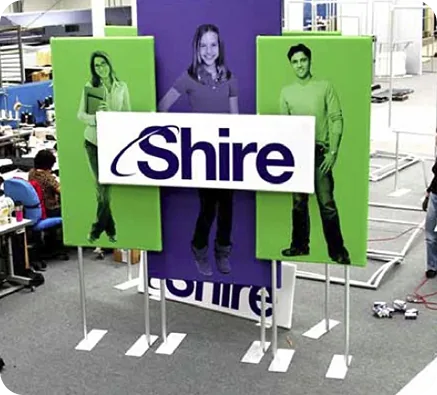
What Is Fabric and Tension Textile Printing?
At its core, fabric printing refers to transferring a digital graphic onto a textile — almost always a polyester-based fabric — rather than onto paper, vinyl, or rigid board. "Tension" describes how that printed fabric is then used: it is stretched tight (tensioned) over a frame so the material pulls taut and smooth, similar to a drum skin, eliminating the wrinkles and sag you'd get from a loosely hung banner. This combination of a printed textile skin and a tensioning frame is what the display industry calls a tension fabric display, and it's the backbone of most modern soft signage — backdrops, pop-up stands, SEG light boxes, and fabric-wrapped structures used at exhibitions and in retail spaces.
How Dye-Sublimation Printing Works
The most common method for printing on polyester fabric is dye sublimation. Artwork is first printed in reverse onto a special transfer paper using sublimation inks. That paper is then pressed against the fabric and run through a heat press, typically around 190–205°C. At that temperature, the solid ink turns into a gas without passing through a liquid stage, and the gas penetrates the open weave of the polyester fibres. As the fabric cools, the dye solidifies again — but now it is chemically bonded inside the fibres rather than sitting on top of them as a surface layer. Some printers also use direct-to-fabric digital printing, where disperse or pigment inks are printed straight onto the textile and then fixed with heat, achieving a similar embedded result. Because the colour becomes part of the fibre rather than a coating, the graphic doesn't crack, peel, or flake the way printed vinyl can. This is also why dye sublimation generally only works well on polyester or polyester blends — natural fibres like cotton don't have the right chemical structure to bond with sublimation dyes.
Types of Tension Fabric Systems and Soft Signage
Fabric display hardware generally falls into a few recognisable categories:
- Pop-up tension frames: collapsible aluminium frames (straight or curved) that a printed fabric skin slides over, used as portable trade show backwalls and backdrops.
- Pillowcase graphics: fabric sewn into a pillowcase-style sleeve that slips over a frame and zips closed at the back, the simplest and most common finishing method.
- SEG (Silicone Edge Graphic) systems: a thin silicone strip sewn into the fabric's edge presses into a groove on the frame's perimeter, producing a perfectly flat, edge-to-edge graphic with no visible border — widely used for retail walls and modern exhibition booths.
- Backlit fabric light boxes: SEG frames fitted with LED modules behind a specially formulated translucent or blockout fabric, used where a glowing, illuminated graphic is wanted.
- Soft signage more broadly also includes flags, table throws, hanging banners, and fabric-wrapped structures and ceiling features.
Why Businesses Choose Fabric Over Rigid Displays
Compared with foam board, PVC panels, or vinyl banners, fabric displays offer a distinct set of practical advantages. They are considerably lighter — a fabric graphic and its frame can weigh a fraction of an equivalent rigid panel system, which matters directly for shipping costs and for staff setting up a booth without tools. The tensioned surface looks smooth and matte rather than glossy, which avoids the glare that can ruin event photography. Because the fabric is woven, not laminated, it resists the cracking and wrinkling that stiffer materials show after repeated folding, and most fabrics can simply be steamed or ironed on a low setting to remove travel creases rather than being discarded. Fabric also packs down small — a graphic that would otherwise need a crate can often ship in a small bag or tube.
Common Uses, Buying Considerations, and Durability
The most frequent applications are trade show and exhibition booth backwalls, step-and-repeat event backdrops, retail pop-up displays and window graphics, conference stage backdrops, and illuminated storefront or mall signage using SEG light boxes. In a market like Bangalore — with a dense calendar of trade exhibitions and a growing retail and startup scene across commercial clusters such as Koramangala, Indiranagar, Whitefield, HSR Layout, Electronic City, Marathahalli, and Domlur — fabric's portability is a genuine advantage for brands moving between venues or refreshing retail displays frequently.
When buying fabric printing, a few factors drive both quality and cost: the fabric's weight and opacity (lighter fabrics are fine for indoor backdrops, but backlit applications need a fabric engineered for even light diffusion without hot spots), whether the use is indoor or outdoor (outdoor flags generally need a breathable mesh fabric to resist wind load), the finishing method chosen (SEG for a seamless premium look versus pillowcase for simpler, budget jobs), and whether fire-retardant treatment is required for the venue. Because large-format printers in Bangalore, including Dazzle Creations, already work across related wide-format formats — large-format and UV printing, eco-solvent printing, event and promotional products, and installation and finishing add-ons — many businesses find it practical to source fabric and soft-signage work alongside their other signage needs from a single local provider rather than juggling separate vendors.
On durability, properly dye-sublimated fabric holds its colour well indoors since the dye is embedded rather than surface-coated, and most polyester display fabrics are machine washable or can be wiped clean. Fold lines from shipping are temporary and come out with light steam heat; harsh detergents and prolonged direct sun on outdoor pieces will still shorten a fabric graphic's life, so it's worth matching the fabric grade to how and where it will actually be used.
Fabric and tension-display printing is a newer request we get alongside our regular UV roll-to-roll printing work — if you have a fabric project in mind, get in touch and we will confirm feasibility for your specific material and display frame.
FAQ( 01 )
Fabric printing prints onto woven polyester textile, where sublimation inks typically bond inside the fibres, while vinyl banner printing applies ink or laminate onto the surface of a PVC sheet. This generally makes fabric lighter, foldable without permanent creasing, and less glossy, while vinyl tends to be more rigid and better suited to outdoor weather exposure.
No. Dye sublimation works reliably only on polyester or high-polyester-content blends, because the sublimation dye needs to chemically bond with polyester's fibre structure. Natural fibres like cotton don't accept sublimation dye the same way.
SEG stands for Silicone Edge Graphic — a fabric graphic with a thin silicone strip sewn around its border that locks into a groove on the display frame. It produces a completely flat, seamless, edge-to-edge look with no visible frame, which is why it's widely used in retail walls and higher-end exhibition stands.
Yes. Backlit (illuminated) fabric displays use a frame fitted with LED lighting behind a fabric specifically formulated to diffuse light evenly without dark spots or hot spots. A standard, non-backlit fabric used on an illuminated frame can look patchy.
With normal indoor use, a well-made dye-sublimated fabric graphic can be reused across many events since the colour is embedded rather than coated. Lifespan depends on handling, cleaning, and exposure to sunlight.
Yes, but outdoor use typically calls for a breathable mesh fabric rather than a solid blockout fabric, since mesh allows wind to pass through and reduces strain on the frame. Fire-retardant and UV-stable finishes are also worth specifying for outdoor or long-duration installations.
Most polyester display fabrics can be hand washed or gently machine washed and air dried, and fold creases from shipping or storage usually come out with a light steam or low-heat iron. Harsh detergents and high heat should be avoided.
The fabric material and dye-sublimation process can cost more per square foot upfront than basic vinyl banners, but the lower shipping weight, compact storage, reusability, and cheap replacement graphics often offset that over multiple uses, particularly for businesses that exhibit repeatedly.
Decide early whether the piece needs to be backlit, indoor-only, or outdoor-rated, since each calls for a different fabric and frame; also confirm the finishing style (SEG versus pillowcase), any venue fire-safety requirements, and turnaround time.