Print Finishing: Lamination, Mounting & Trimming Explained
A large-format print is only as good as the finishing work that follows it. The same banner or poster can look sharp for a trade show or fade and curl within weeks, depending on whether it was laminated, mounted, trimmed, and edge-finished correctly. Finishing is the stage where a flat printed sheet becomes a product that can actually survive handling, weather, hanging, or daily foot traffic — and it is where a lot of avoidable damage, glare, and installation problems get prevented before they happen. For businesses across Bangalore ordering signage for storefronts, offices, or events, understanding these finishing options makes it much easier to brief a print vendor and avoid paying for the wrong level of durability.
What Print Finishing Is and Why It Matters
Finishing covers everything done to a print after it comes off the printer and before it's installed or handed over: laminating the surface, bonding it to a rigid board, cutting it to its final shape, and adding hardware like grommets or hems so it can be hung or mounted. None of this changes the printed image itself, but it determines how long that image lasts, how it looks under different lighting, and whether it can be installed the way the client needs. A print left unfinished is more vulnerable to scuffing, moisture, UV fading, and tearing at stress points — problems that show up weeks or months later, often after the client has already paid for installation.
Lamination: Gloss, Matte, and UV/Scratch Protection
Lamination applies a thin protective film (or occasionally a liquid coating) over the printed surface. The two most common finishes are gloss and matte. Gloss lamination deepens color saturation and contrast, which suits retail graphics, point-of-sale displays, and photography-heavy prints, but it can produce glare under direct light or spotlighting. Matte lamination reduces glare and gives a softer, more premium look, which works well for indoor signage, menus, and wall graphics viewed up close, though it slightly mutes color vibrancy compared to gloss. A middle option, often called satin or low-gloss, balances the two.
Beyond the visual effect, lamination's real job is protection. A laminate film acts as a barrier against UV exposure, scratches, fingerprints, moisture, and general abrasion. For prints that will sit outdoors or be touched frequently, UV-rated laminate is what actually extends the usable life of the print — unlaminated outdoor prints are far more prone to visible fading within months, especially with solvent and latex inks exposed to direct sun. Lamination is typically applied as cold or hot film, depending on the substrate and the printer's equipment.
Mounting on Foam Board, MDF, and ACP
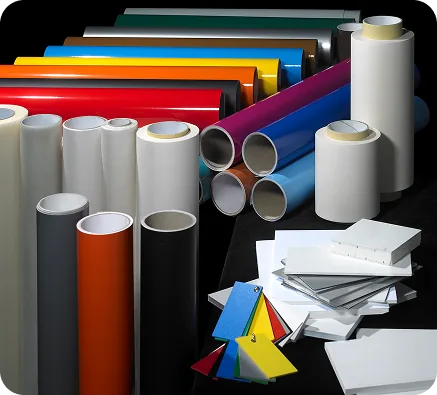
Mounting bonds a flexible printed sheet to a rigid backing so it holds its shape and can stand, hang, or be screwed into a wall. The substrate chosen depends on weight, finish, and where the sign will live:
- Foam board is lightweight, inexpensive, and easy to cut, making it a common choice for short-term indoor displays, exhibition panels, and presentation boards — but it dents easily and isn't suited to outdoor use or repeated handling.
- MDF (medium-density fibreboard) is heavier and more rigid, giving a sturdier, more premium feel for indoor signage, wayfinding, and retail fixtures, though it needs protection from moisture.
- ACP (aluminium composite panel) — a thin layer of plastic sandwiched between two aluminium sheets — is the go-to choice for outdoor and semi-permanent signage because it resists warping, moisture, and temperature swings far better than foam board or MDF, while still being lighter than solid metal.
Choosing the right board is as much about the installation environment as the budget: a foam-board panel priced to last a weekend event will not hold up outside a shopfront for two years, and an ACP-mounted sign for a one-day exhibition is usually more than the job needs.
Eyelets, Hemming, and Banner-Ready Finishing
Banners made from vinyl, flex, or mesh need finishing that lets them be hung securely without tearing. Hemming folds and seals the raw edges of the banner, which stops fraying and gives the edge enough strength to take hardware. Eyelets (also called grommets) are then punched through the hemmed edge at regular intervals so the banner can be tied, hooked, or roped into place. For larger banners exposed to wind, pole pockets (sewn sleeves that a pole or cable slides through) distribute strain more evenly than eyelets alone and reduce the risk of tearing in gusty conditions. Skipping hemming and eyelets on an outdoor banner is one of the most common causes of early banner failure — the edges simply give way under tension.
Precision Trimming and Die-Cutting
Not every print is a simple rectangle. Trimming cuts a print down to its finished size, while die-cutting (or CNC routing on rigid materials) cuts it into a custom shape — a logo outline, a cut-out letter, a contoured sticker, or a precisely shaped rigid panel. For rigid substrates like MDF, acrylic, or wood, CNC routing allows clean, repeatable cuts for shapes that would be impossible with a blade alone. Precision here matters for anything that will sit beside other elements, because even a small misalignment is visible once mounted.
Choosing the Right Finish for Your Application
The right finishing combination depends mainly on two questions: how long does this need to last, and will it be indoors or outdoors? A one-day event banner can get away with minimal finishing — maybe just hemming and eyelets, no lamination. A storefront sign meant to last years needs UV-rated lamination and a weather-resistant substrate like ACP. An indoor retail display benefits from matte or gloss lamination for look and light handling, mounted on foam board or MDF depending on how often it will be moved. As a large-format printing provider working across Bangalore — including Koramangala, Indiranagar, Whitefield, HSR Layout, and Electronic City — Dazzle Creations can help match these finishing choices to the actual use case rather than defaulting to the most expensive option.
Durability and Maintenance
Finished prints still need basic care to get their full expected life. Laminated surfaces should be cleaned with a soft cloth and mild solution rather than abrasive cleaners, which can scratch the film over time. Mounted boards should be checked periodically for edge lifting or moisture ingress, especially MDF in humid conditions. Outdoor banners benefit from an occasional check of eyelets and hems, since these are the first points to show wear. None of this is complicated, but a five-minute check every few months is usually what separates a sign that looks good for its full intended lifespan from one that needs early replacement.
Lamination and mounting are typically handled alongside the print job itself; see our UV flat-bed printing page for rigid-substrate finishing options.
FAQ( 01 )
Yes, in general. UV-rated laminate films act as a barrier against sun exposure, moisture, and abrasion, which slows the fading and surface damage that unprotected prints experience outdoors. The exact lifespan improvement depends on ink type, climate, and the laminate used.
Gloss lamination boosts color saturation and contrast but can glare under bright lighting, while matte reduces glare and gives a softer look at the cost of some color punch. Retail and photo-heavy graphics often lean gloss; indoor signage and menus viewed up close often lean matte.
Foam board is light and affordable but best for short-term indoor use since it dents and can't handle weather. MDF is sturdier and gives a more premium indoor finish. ACP (aluminium composite panel) is the most weather-resistant of the three and is generally the right choice for outdoor or long-term signage.
Raw banner edges fray and tear under tension, especially outdoors in wind. Hemming seals and reinforces the edge, and eyelets give it defined, reinforced points to tie or hook the banner, which spreads out the strain instead of concentrating it on unprotected material.
A pole pocket is a sewn sleeve along a banner's edge that a pole, rope, or cable slides through, rather than relying only on eyelets. It's generally recommended for larger banners or ones that will face consistent wind, since it distributes force more evenly than eyelets alone.
Trimming cuts a print to a standard finished size, usually a straight edge or rectangle. Die-cutting (or CNC routing for rigid materials) cuts it into a custom shape, such as a logo outline or contoured panel, which trimming alone can't achieve.
Start with two questions: how long does the piece need to last, and will it be indoors or outdoors? Short-term indoor displays can use lighter finishing like foam board mounting with no lamination, while anything long-term or outdoor generally needs UV lamination and a weather-resistant substrate like ACP.
Most finishing options apply broadly across printing methods, but the right choice still depends on the base material — flexible media like vinyl or canvas suit lamination and hemming, while rigid substrates like acrylic or wood suit mounting and CNC-cut die-cutting.
It varies widely with climate, ink, laminate quality, and sun exposure, so there's no single universal number. As a general rule, a well-laminated print on a weather-resistant substrate like ACP will substantially outlast the same print left unlaminated or mounted on a non-weatherproof board.
Yes, as a Bangalore-based large-format printing company, Dazzle Creations provides finishing and add-on work — including cutting and mounting onto rigid materials like MDF, acrylic, and wood panels via CNC routing — alongside its eco-solvent, UV flatbed, UV roll-to-roll, and HP Latex printing services, serving businesses across areas including Koramangala, Indiranagar, Whitefield, HSR Layout, and Electronic City.