Retail POP/POS Display Printing in Bangalore
Point-of-purchase (POP) and point-of-sale (POS) displays are the printed and fabricated materials retailers use inside a store to promote a product, brand, or offer at the exact moment a shopper is deciding what to buy.
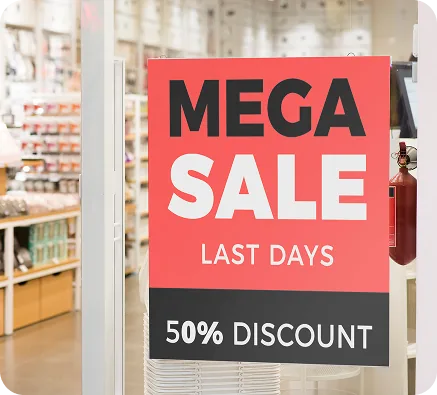
What Are POP/POS Displays and Why They Matter in Retail
Point-of-purchase (POP) and point-of-sale (POS) displays are the printed and fabricated materials retailers use inside a store to promote a product, brand, or offer at the exact moment a shopper is deciding what to buy. The terms are often used interchangeably — POP generally refers to anything placed to catch attention anywhere in the store, while POS more narrowly refers to displays right at the checkout or billing counter. In practice, both cover the same family of materials: counter displays, shelf talkers, danglers, floor stands, and window merchandising pieces. These displays matter because a large share of retail purchase decisions are made inside the store, not before the shopper walks in. A well-placed display can draw a shopper's eye to a product on a shelf full of competitors, communicate a price or offer instantly, and nudge an undecided shopper toward an impulse buy at the counter.
Common Types of Retail POP/POS Displays
Counter displays are small, countertop units placed near the billing counter, usually holding products, samples, or leaflets at eye level — ideal for low-cost, high-margin impulse items. Shelf talkers (edge strips) are thin printed strips clipped to the edge of a shelf to flag a price, offer, or key selling point. Danglers (hangers) are small printed cards or shapes that hang from a shelf edge, ceiling, or display unit, swinging gently to catch the eye from a distance. Floor display stands are free-standing units placed in aisles or at store entrances for a seasonal push or new launch. Gondola-end displays are built for the end caps of shelving rows — high-traffic spots where shoppers pass most often. Window displays are larger-format graphics or branded panels for shop windows, aimed at pulling in footfall from outside.
Materials and Durability for In-Store Display
Material choice for a POP/POS display is mostly a trade-off between cost, campaign length, and how much handling the display will face. Lightweight corrugated board and cardboard are the industry's default for short-run, temporary displays because they're inexpensive to produce in volume and easy to flat-pack and ship. Foam board sits a step up: still light, but with a cleaner, flatter surface that holds printed graphics sharply, often used for shelf talkers, danglers, and smaller standees. For displays expected to stay on the floor for months rather than weeks, retailers typically move to sturdier substrates — rigid boards, ACP, sunboard, or acrylic — which resist the dents, moisture, and repeated handling that a busy retail floor puts on anything at shopper height.
Design and Placement Considerations
A POP/POS display has to work within constraints that a poster or banner doesn't. Shelf and counter space is limited and shared with other brands' displays, so size has to be planned against the actual footprint available. Messaging has to be readable in a glance, since shoppers typically notice a display for only a second or two while walking past or waiting at a counter — a dominant price, offer, or single benefit works better than dense copy. Brand consistency matters too — colours, logo treatment, and typography on the display should match the product's packaging and other marketing. Placement also needs to account for durability of use: a display near a billing counter will be touched and restocked constantly, while a window display is more exposed to sunlight and temperature swings.
Choosing the Right Display for Your Retail Space
The right display format depends on where in the store it will sit and what it needs to do. A small counter-service store has little room for a floor stand and is usually better served by a counter display or shelf talkers that make the most of limited space near the till. A larger supermarket aisle has room for floor stands and gondola-end units that can hold stock in volume and catch shoppers from further away. Campaign length should also drive the choice: a two-week festival promotion doesn't justify a permanent acrylic unit, while a display meant to represent the brand year-round is worth the extra cost of a more durable material.
Why Work With a Local Bangalore Printer for Retail Displays
Retail displays are a production job as much as a design one — print quality, structural assembly, and finishing all have to come together correctly before the piece ever reaches a store shelf. Dazzle Creations, based in Domlur, Bengaluru, lists visual merchandising and retail display work as part of its add-on services, alongside window display branding. Its large-format capabilities — including UV flatbed printing onto acrylic, ACP panels, sunboard, and other rigid substrates, and HP Latex printing for retail displays and floor/window graphics — cover the kind of materials this guide describes.
FAQ( 07 )
They overlap heavily and are often used interchangeably. POP (point-of-purchase) typically refers to any in-store display meant to influence a purchase; POS (point-of-sale) usually refers more specifically to displays right at the checkout or billing counter.
For longer campaigns, sturdier substrates like ACP, sunboard, or acrylic hold up better to repeated handling and store-floor wear than plain corrugated cardboard, which is better suited to short-term, single-campaign use.
It depends on the counter space available at the specific store — there's no universal standard size. It's best to measure the actual counter footprint at a few representative stores before finalising dimensions.
Lightweight corrugated displays are generally built for shorter campaigns — weeks to a couple of months of regular handling — rather than long-term permanent placement.
A dangler (or hanger) is a small printed card or cut shape that hangs from a shelf edge, ceiling, or display unit and moves slightly, which helps it catch a shopper's eye from a distance even in a busy aisle.
Yes — shelf talkers are typically printed per product or per offer, since their job is to flag a specific price, promotion, or selling point at the exact shelf spot where that item sits.
It varies by design and store format — the available floor space at the target stores should guide the design brief from the start.
Matching colours, logo treatment, and brand typography to existing packaging is standard practice in display design — sharing packaging artwork and brand guidelines with the printer upfront makes this easier to get right.
High-resolution, print-ready vector or layered files (such as AI, EPS, or high-DPI PDF) are generally preferred for large-format and die-cut display work, since they scale cleanly and keep text and logos sharp at full display size.
No — the types of standees guide covers event-focused formats like roll-up standees, X-banners, pop-up fabric backdrops, and table-top standees. This guide focuses specifically on in-store retail merchandising: counter displays, shelf talkers, danglers, floor stands, and window displays.