Vehicle Wraps & Wall Decals: A Practical Buying Guide
Choosing between a full wrap, partial wrap, or simple graphics -- and the right vinyl for each -- affects both cost and how long the result lasts. Here is what to consider before you order.
Wraps and Decals: Two Different Jobs, One Printing Process
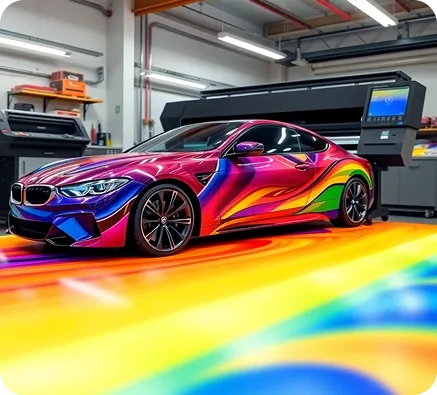
Vehicle wraps and wall decals are both usually printed on eco-solvent vinyl, but the similarities mostly end there. A wrap has to survive curves, weather, and years of road exposure. A decal has to sit flat, look clean at close range, and often needs to be removable without damaging a wall. Choosing the right vinyl and coverage level for each makes a real difference in cost and durability.
Coverage and Material Options
| Type | Coverage | Recommended Vinyl | Typical Lifespan |
|---|---|---|---|
| Full Vehicle Wrap | Entire body | Cast vinyl | 5+ years |
| Partial Wrap | Selected panels | Cast or calendared vinyl | 3-5 years |
| Vehicle Graphics / Lettering | Logo and text only | Cast vinyl | 3-5 years |
| Wall Decal (permanent) | Full or partial wall | Calendared vinyl | 2-4 years |
| Wall Decal (removable) | Full or partial wall | Removable adhesive vinyl | Removable without damage |
Full Wraps vs Partial Wraps vs Graphics
A full wrap covers the entire vehicle body and gives maximum visibility and the biggest visual impact, which suits vehicles used mainly for advertising, such as delivery fleets. A partial wrap covers selected panels and costs less while still standing out. Simple graphics or lettering -- just a logo, name, and contact details -- is the most budget-friendly option and works well for service vehicles where subtlety is fine.
Cast vs Calendared Vinyl
Cast vinyl is thinner, more conformable, and holds up better over time, which is why it is the standard for full wraps and any surface with curves. Calendared vinyl is more economical and works well for flat panels, partial wraps, and wall decals where extreme conformability is not needed.
Wall Decals: Permanent or Removable
Permanent wall decals use a stronger adhesive suited for long-term office branding, retail walls, or feature walls that are not expected to change. Removable decals use a gentler adhesive designed to come off cleanly, which suits rented spaces, temporary campaigns, or walls that get rebranded periodically.
Installation and Maintenance
- Surface preparation matters. Clean, dry, dust-free surfaces are essential for a wrap or decal to adhere properly and last as long as it should.
- Professional installation avoids bubbling and misalignment. This is especially important on vehicle curves and panel gaps.
- Avoid abrasive cleaning on wraps. A soft cloth and mild soap keep a wrap looking sharp for years.
- Plan for removal from day one on rented spaces. Choosing removable vinyl upfront avoids wall damage later.
See the printing process behind these products on our eco-solvent printing page, browse completed wrap and decal projects, or check our add-on services for installation and finishing options.
FAQ( 01 )
Cast vinyl is thinner and more conformable, making it the better choice for full wraps and curved surfaces, while calendared vinyl is more economical and suited to flat panels and partial wraps.
A full wrap using cast vinyl typically lasts five years or more with reasonable care, though direct sun exposure and cleaning habits can affect this.
Yes, removable adhesive vinyl is specifically designed to come off cleanly without damaging paint or wallpaper, which makes it the right choice for rented or temporary spaces.
Yes, a partial wrap covers fewer panels and uses less material and installation time, so it typically costs meaningfully less than a full wrap while still giving strong visibility.
Yes, professional installation is available and recommended, since proper surface preparation and application are what prevent bubbling, peeling, and misalignment.
Cast vinyl cut graphics or lettering are usually recommended for this, since they give a clean, professional look at a lower cost than a full or partial wrap.