Backlit Film Printing: A Complete Guide to Illuminated Light Boxes
Walk past any illuminated menu board, mall advertising panel, or glowing retail window display and you're looking at backlit film doing its job. Unlike a standard printed banner that relies on light bouncing off its surface, backlit film is engineered to let light pass through it from behind, turning an ordinary print into a glowing display that grabs attention day and night. Getting this right depends on choosing the correct material and printing it the correct way, because a print designed for reflected light looks completely different — usually washed out or patchy — once a light source sits behind it.
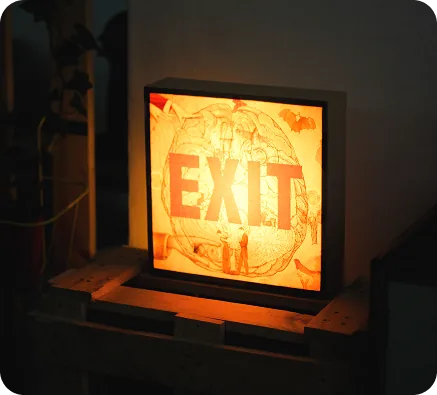
What Backlit Film Is and How It Works in a Light Box
Backlit film is typically a translucent polyester (PET) film, often in the range of roughly 150–250 microns thick, coated to accept eco-solvent, UV-curable, or latex inks. Common commercial backlit stocks run around 8–10 mil, and rolls are generally available in widths suited to large-format printers so they can be sized to standard or custom light box dimensions. The front surface may be semi-gloss, satin, or matte depending on the brand, and the film is built to transmit light evenly across its entire surface rather than letting it leak unevenly through thin or thick spots. That even transmission is the whole point: a light box's LED or fluorescent source sits behind the printed film, and the film's job is to diffuse that light so the image looks consistent and bright rather than showing visible bright spots where individual LEDs sit.
Backlit Film vs Standard Vinyl: Why Diffusion and Color Behave Differently
Printed vinyl banners and frontlit signage are designed around reflected light — light hits the print, bounces back, and passes through the ink layer twice before reaching the viewer's eye, which is part of why colors look rich and saturated. In a light box, the same print only has light pass through the ink once, so color density effectively looks weaker, an effect sign-industry professionals often describe as the color looking "washed out" or "halved" compared to how it looks under normal room light. Standard vinyl also isn't built to diffuse light evenly; because it isn't engineered as a light-transmitting substrate, backlighting it tends to create visible hotspots over individual LED modules and an uneven glow. This is why dedicated backlit film — not reflective vinyl — is the correct material for any genuinely illuminated application, and why printers working with backlit film often increase ink density, add a white ink layer, or use a specific color/white/color print structure to compensate for that single-pass light loss.
Types and Printing Approaches: Single-Sided, Double-Sided, and White-Ink Methods
There are a few practical variations worth knowing. Standard single-sided backlit film is printed on one side and is the most common and economical choice for most light boxes. Double-sided or "day/night" style film — a concept historically associated with photographic Duratrans-type media and now achievable with modern inkjet equivalents — is coated to accept ink on both sides or uses a layered approach so the sign looks correct both in daylight (reflected light) and after dark (backlit), though this usually needs more layers or passes and costs more to produce. On digital UV and latex printers, achieving a balanced look increasingly relies on printing a white ink layer within the RIP, sandwiched between color layers, which helps the graphic hold its saturation whether viewed lit or unlit. Printers often run test prints under the actual light box before committing to a full production run, since the right ink density depends on the specific light source's brightness and the film's own diffusion properties.
Common Uses for Backlit Film
Backlit film shows up anywhere a sign needs to be legible and attractive in both lit and unlit conditions, or needs to stand out after dark. Typical applications include illuminated light box signage for storefronts and building façades, restaurant and cafe menu boards, framed photo displays in retail stores and galleries, backlit retail window displays designed to draw foot traffic, and the large advertising panels seen in malls, airports, metro stations, and city-light bus-stop displays. In each case, the material is chosen specifically because the sign needs to perform well in both daytime ambient light and nighttime or low-light backlit conditions.
Where This Fits for Bangalore Businesses
Backlit film printing sits within the broader large-format and signage printing services many Bangalore print shops already offer, since it uses the same UV flatbed, UV roll-to-roll, or HP latex presses used for vinyl, acrylic, and other signage substrates — just loaded with a different, light-transmitting media. Dazzle Creations, a Bangalore-based large-format printing provider, lists backlit film among the materials it works with alongside vinyl, acrylic, and other signage stock, making it a natural option for businesses that already use the same shop for banners, retail graphics, or architectural signage. Businesses across Koramangala, Indiranagar, Whitefield, HSR Layout, Electronic City, Marathahalli, and Domlur commonly need illuminated menu boards, storefront light boxes, or retail displays, and working with a local large-format printer that understands backlit-specific ink density and material choice helps avoid the washed-out or patchy results that come from printing backlit jobs on the wrong substrate.
How to Choose the Right Backlit Film and Keep It Looking Good
Before ordering, it helps to know your light box's actual light source (LED strips versus fluorescent tubes), since output and diffusion needs can vary. Decide early whether you need single-sided or day/night double-sided printing, and whether a matte or gloss finish suits the application — gloss generally renders sharper detail but can show more glare, while matte finishes tend to even out hotspots. A few points matter beyond the material itself:
- Request a test print viewed in the actual light box before committing to a full production run, since backlit color appearance can't be reliably judged on a screen or under normal room lighting.
- For close-viewing applications like menu boards, use higher-resolution source files, since viewers stand much closer to these than to a large mall advertising panel.
- Ask about mounting method (tensioned frame, pocket/weld hems, or grommets) to match your specific light box hardware.
- Confirm whether the printer offers white-ink or double-layer printing if your sign needs to look balanced both lit and unlit.
Indoor backlit signage, protected from weather, generally holds its color well for several years with minimal fading since it isn't exposed to UV, rain, or temperature swings. Outdoor light boxes face more stress from heat, humidity, and UV exposure, so inks and film should be chosen with that in mind, and the light box interior and film surface benefit from periodic cleaning to maintain brightness and even light output over time.
Backlit film output runs on our UV roll-to-roll printing line; for the illuminated structures these sit behind, see our illuminated signage guide.
FAQ( 01 )
Backlit film is a translucent print media, typically a polyester (PET) film, designed to be mounted in front of a light source inside a light box so the printed image is lit from behind rather than relying on reflected light.
Standard vinyl is designed for reflected light and isn't built to diffuse light evenly, so backlighting it causes visible hotspots and poor color; backlit film is specifically engineered to transmit and diffuse light uniformly across the whole surface.
Light only passes through the ink once in a backlit application versus twice with reflected light, which reduces apparent color density; printers typically compensate with higher ink densities, a white ink layer, or a color/white/color print structure.
Yes, double-sided or "day/night" style printing exists so a sign looks correct both in daylight and when backlit at night, though it generally requires more print layers or passes and costs more than single-sided printing.
Eco-solvent, UV-curable, and HP latex printers are all commonly used on backlit film, with UV-curable and latex generally offering good scratch and fade resistance for signage use.
Indoor, weather-protected backlit signage typically holds its color for several years; outdoor light boxes face more UV, heat, and humidity exposure, so durability depends more on ink type and whether the film or print is protected from direct weathering.
Commercial backlit films commonly run in the roughly 8–10 mil (around 150–250 micron) range, though the right choice depends on your printer's recommendation and the specific light box and application.
Yes, backlit film is commonly used with LED light boxes and is valued for diffusing LED point-source light evenly, which helps avoid the visible hotspots that can appear over individual LED modules.
Gloss finishes tend to render sharper detail and more vivid color but can show more glare, while matte finishes diffuse light a bit more and can help smooth out uneven hotspots from the light source behind them.
Any large-format print shop that already runs UV flatbed, UV roll-to-roll, or latex presses and stocks backlit-specific film can typically handle this; Dazzle Creations in Bangalore, for example, works with backlit film alongside other signage substrates as part of its large-format printing services.