Illuminated Signage: Do You Actually Need Lighting?
Illuminated signage keeps a business visible after dark and often stands out even during the day, but lighting isn't automatically the right choice for every signboard — it adds cost, ongoing power draw, and occasional maintenance. Here's how the main lit-signage options compare and when non-illuminated is genuinely the better fit.

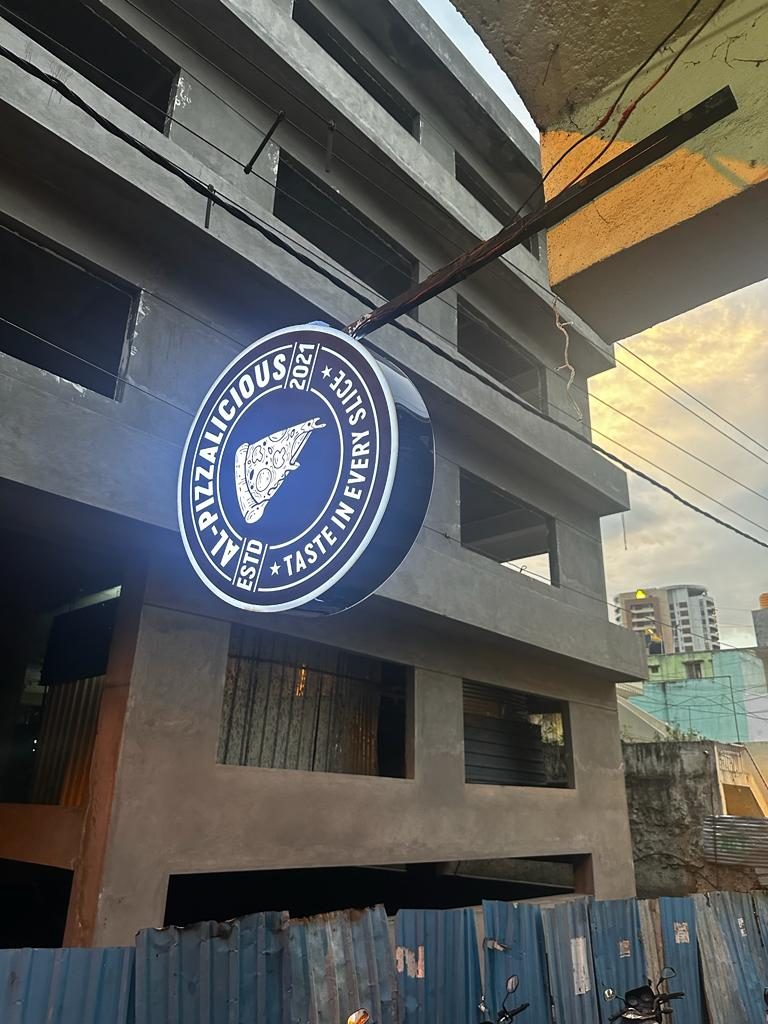
Types of Illuminated Signage
- Backlit (halo-lit) signage: LEDs mounted behind the letters or panel so light glows outward around the edges — a softer, modern look.
- Front-lit signage: LEDs illuminate the face of the letters or panel directly, giving strong readability from a distance.
- Backlit acrylic panels: a flat acrylic panel lit from behind or within, commonly used for panel signage and skylit boards.
- Edge-lit/LED strip signage: LEDs run along panel edges, lighting the sign through internal reflection rather than a full internal light source.
When Illumination Is Worth the Cost
Storefronts operating into the evening, businesses on wide roads or highways where visibility matters at speed, and any signage meant to work as a landmark or night-time draw for footfall. If your business operates only during daylight hours in a well-lit indoor mall or complex, non-illuminated signage may work just as well at a lower cost.
Running Costs and Maintenance
LED signage draws relatively little power compared to older fluorescent/neon lighting, and individual LED modules are generally easier and cheaper to replace than a whole neon tube if something fails. That said, any illuminated sign needs occasional cleaning and, over a period of years, module replacement.
Non-Illuminated Isn't "Lesser" — It's a Different Trade-off
A well-fabricated non-lit sign in ACP, acrylic, or dimensional letters still looks professional and reads clearly in daylight — it simply won't stand out after dark the way a lit sign does. For many indoor or daytime-only businesses, this is a perfectly sound choice.
Compare lit options against non-lit solid letters, or see profile board signage for one specific lit format.
FAQ( 01 )
No — LED modules used in modern signage draw comparatively little electricity; the bigger cost is the upfront fabrication and installation, not ongoing power.
LED modules generally have a long service life, often several years of regular nightly use, before individual modules may need replacement.
Sometimes — it depends on the existing structure and materials; in many cases it's more practical to fabricate a new lit sign than retrofit lighting into an old non-lit board.
Yes — illuminated signage needs a power point near the installation location, which is factored into the site visit and installation plan.
Front-lit generally reads better from a greater distance since the light comes directly from the letter face; halo-lit is better suited to closer viewing distances and a more ambient look.
Either is possible — some businesses run signage on a timer to limit hours and power use, while others keep it on continuously; we can wire it either way.
It depends on your operating hours and foot traffic pattern — if you're closed by early evening on a quiet street, a non-illuminated sign may be the more cost-effective choice.
Yes — for example, a business name in lit channel letters with a non-lit tagline or panel underneath is a common way to balance cost and impact.