What Actually Affects Printing and Signage Costs:
Printing and signage pricing varies a lot from job to job, and it's rarely just about "cost per square foot." Here's what genuinely moves the price, so you know what to ask about (and what to adjust) when getting a quote.
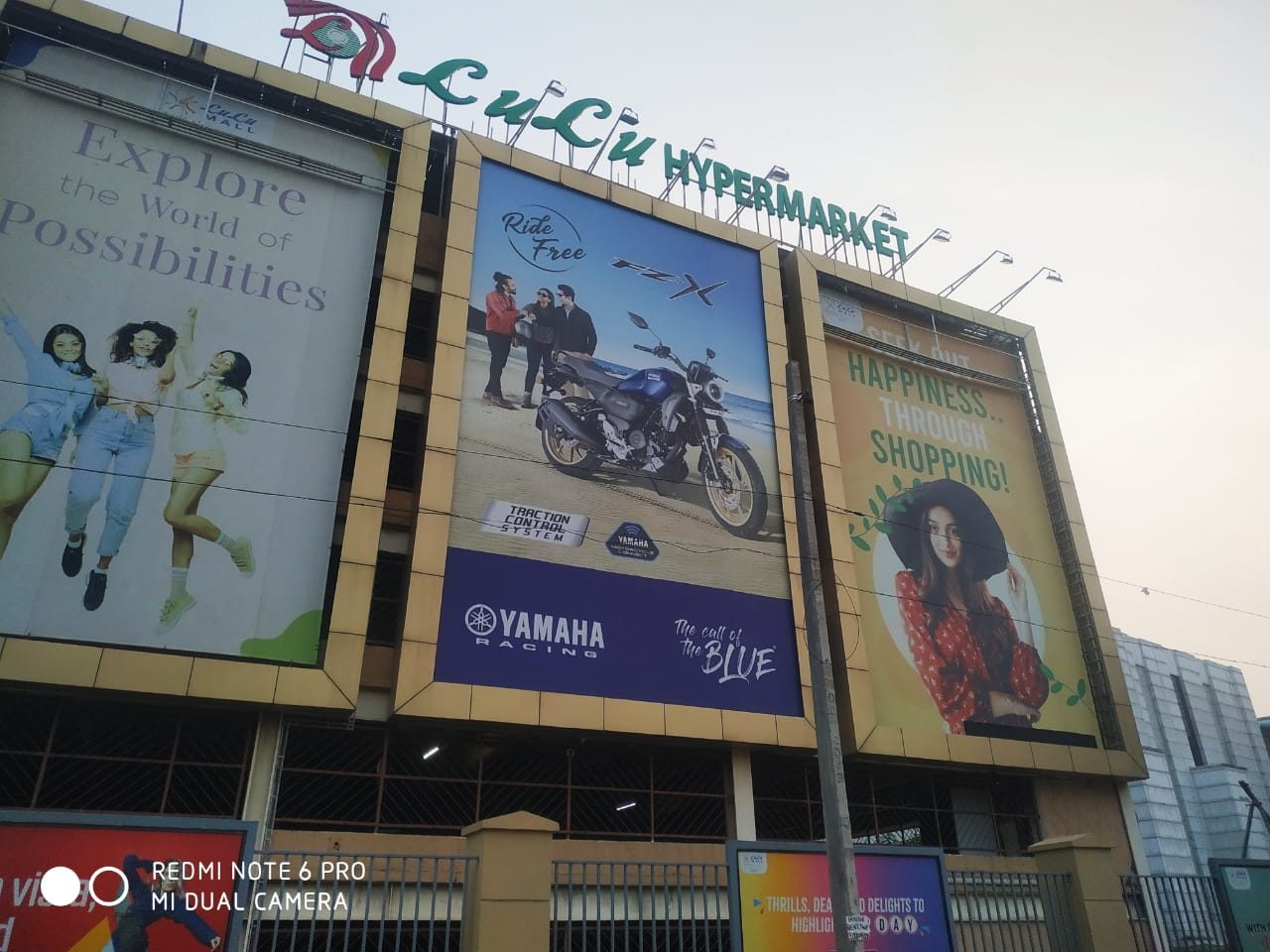
Material Choice
This is usually the single biggest cost driver. Flex is the most economical print substrate; vinyl, canvas, and fabric sit in the middle; ACP, acrylic, and metal fabrication for dimensional signage cost more again, scaling further with thickness and grade (standard vs UV-stable, standard vs fire-rated ACP).
Size and Quantity
Larger prints obviously cost more in raw material, but per-unit cost often drops with volume — printing five identical standees or ten identical shop boards is typically cheaper per piece than printing one.
Finishing and Lamination
Lamination (matte or gloss) adds durability and cost; edge finishing (hemming, eyelets on banners; polished edges on acrylic) adds a smaller but real cost; mounting hardware (frames, standoffs, LED modules) for dimensional signage adds meaningfully more.
Illumination
Adding LEDs, wiring, and a power connection to any sign format — channel letters, backlit panels, profile letters — adds cost on top of the base fabrication, both for the components themselves and the additional labour.
Design Complexity
A straightforward text-and-logo layout is quicker to prepare and fabricate than an intricate custom shape, multiple colours requiring separate cutting or masking, or a design needing significant pre-press correction from a low-resolution source file.
Installation and Site Conditions
Ground-floor, easily accessible installations cost less than high-rise, scaffolding-required, or structurally complex mounts (like sky signage). Site access, height, and whether special equipment is needed all factor in.
Turnaround Time
Standard lead times are generally more cost-effective than rush jobs, which often require reprioritising production and sometimes overtime labour to meet a tight deadline.
Why We Don't Publish a Flat Price List
Because these factors interact — a small acrylic sign with LED lighting can cost more than a much larger unlit ACP board — a genuinely accurate quote needs to account for your specific size, material, finish, and site conditions rather than a generic rate that may not reflect your actual job.
Once you know what drives cost, see how to choose the right signboard or get in touch for a quote.
FAQ( 01 )
Not proportionally — larger jobs often have a lower cost per unit of area than very small ones, since setup and material wastage are spread across more output.
Often yes, especially if it means reprioritising the production queue or working outside standard hours — but not every rush request requires this, so it's worth asking rather than assuming.
Usually because of what's not visible at a glance — the substrate grade, whether it's illuminated, the finishing quality, or the complexity of the underlying structure.
Generally yes, if the base board is structurally sound — re-skinning an existing ACP or acrylic board with new graphics avoids the cost of fresh fabrication.
Indirectly — a low-resolution or poorly prepared file may need rework before it's print-ready, which can add time (and sometimes cost) compared to a clean, print-ready file from the start.
Ask specifically about installation, any required approvals, and ongoing maintenance (especially for lit signage) — these are sometimes quoted separately from fabrication.
Share the size, material preference (or the intended use, if you're not sure), whether it needs illumination, and photos of the installation site — that's usually enough for us to give a realistic estimate.
Material and fabrication costs are generally consistent citywide; what can vary is installation cost for harder-to-access sites, regardless of which part of the city they're in.