Profile Board Signage Explained:
"Profile" signage refers to letters or logos fabricated with a defined edge (or "profile") — typically metal or acrylic returns that give the letter real depth — most often built to be halo-lit, so light glows out from behind the letter onto the wall rather than through the letter face itself.
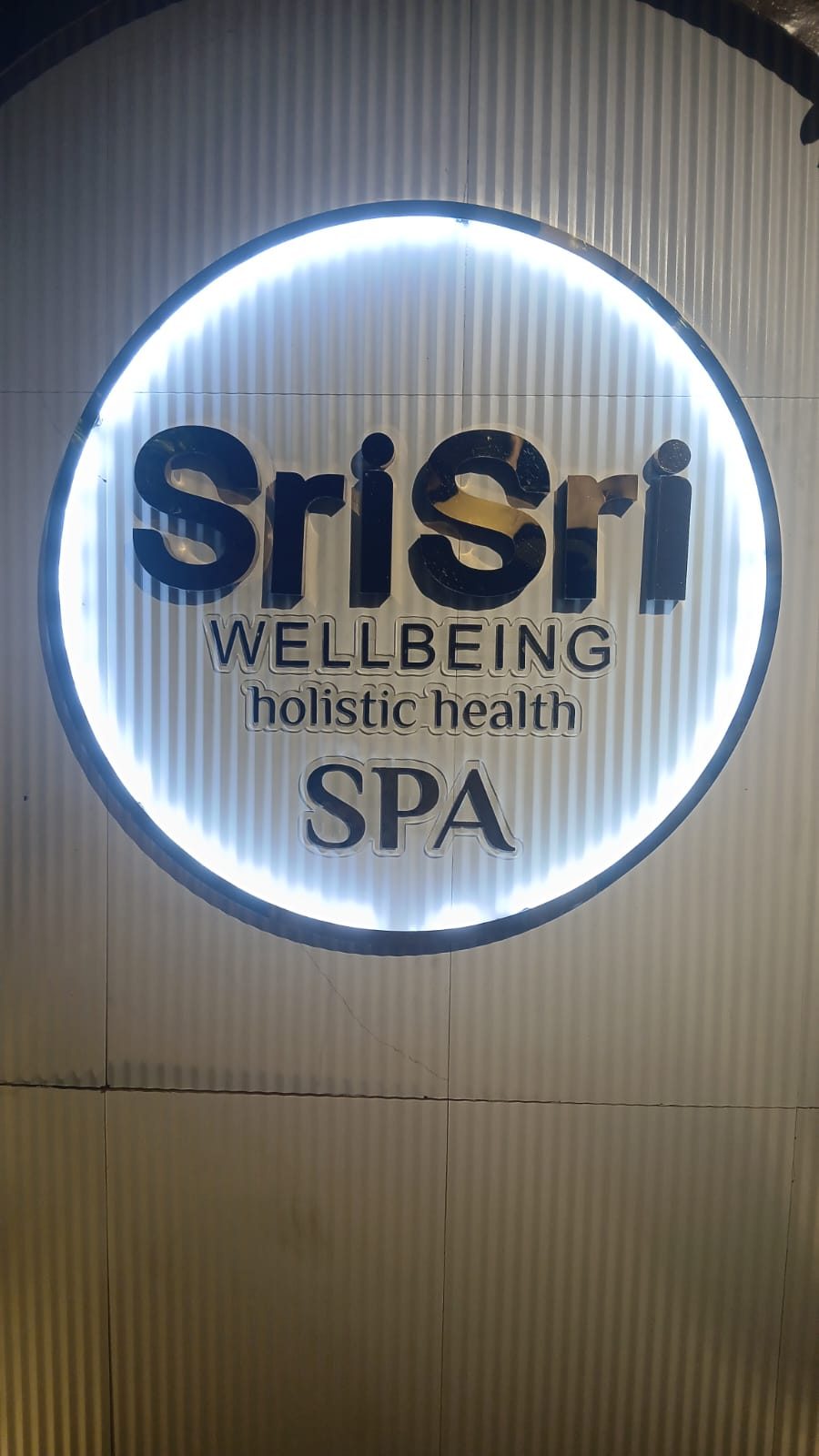
How Profile-Lit Letters Are Built
A profile letter is essentially a shallow box: a solid (often metal) face, with sides (the "profile" or "return") that give it depth, mounted a short distance off the wall on spacers. LEDs are placed behind the letter, facing the wall, so the light spills outward around the letter's silhouette rather than lighting up the letter itself. This is what creates the soft, modern halo-glow look many upscale storefronts and offices use.
Profile Boards vs Channel Letters
The construction is similar, but profile letters are typically solid-faced (no light through the front), designed purely for the halo effect, whereas channel letters more often light up through the face itself (front-lit) or combine both effects. Profile signage tends to read as more understated and premium; channel letters read as brighter and more attention-grabbing from a distance.
Materials Used
Stainless steel or aluminium are the most common face materials for a crisp, premium profile letter; acrylic profile letters are also used, usually for a lighter-weight or more budget-conscious version of the same effect.
Where Profile Signage Works Best
Corporate reception walls, office building entrances, upscale retail storefronts, and any application where the brand wants a refined, dimensional look rather than the brightest possible night-time visibility.
Profile-lit letters are one of several lit options — see our full illuminated signage guide for how it compares to halo and backlit signage.
FAQ( 01 )
No — profile-lit letters are used both indoors (reception walls) and outdoors (building entrances, storefronts), though outdoor installations need proper weatherproofing on the wiring and mounting.
They're closely related terms — "profile" usually describes the letter's physical construction (a face with a defined depth/edge), while "halo-lit" describes the specific lighting effect (glow around the letter) that profile letters are most often built to produce.
Not typically in their standard form — a profile letter with a solid face is built specifically for the halo effect. A different construction (an illuminated or translucent face) would be needed for front lighting too.
Usually a small gap — often 20-40mm — just enough for the LED glow to spread evenly onto the wall behind without the letter looking like it's floating too far off.
Yes, generally — the metal fabrication, depth, and internal wiring add cost compared to a flat printed panel, but the visual result is significantly more premium.
Quality LED modules used in signage commonly run tens of thousands of hours before noticeable dimming, which in practice means years of daily use before any replacement is needed.
Any font or logo shape that can be converted to a clean vector outline can generally be fabricated as profile letters — the more intricate the shape, the more careful the fabrication needs to be.