Skylit Signage: Rooftop and Large-Format Branding Explained
"Skylit" signage — also called a sky sign — refers to large-format signage mounted high up on a building's rooftop, parapet, or upper facade, designed to be visible from a distance across the skyline rather than at street level. These are the big, illuminated brand names you see on top of buildings along highways and commercial districts.
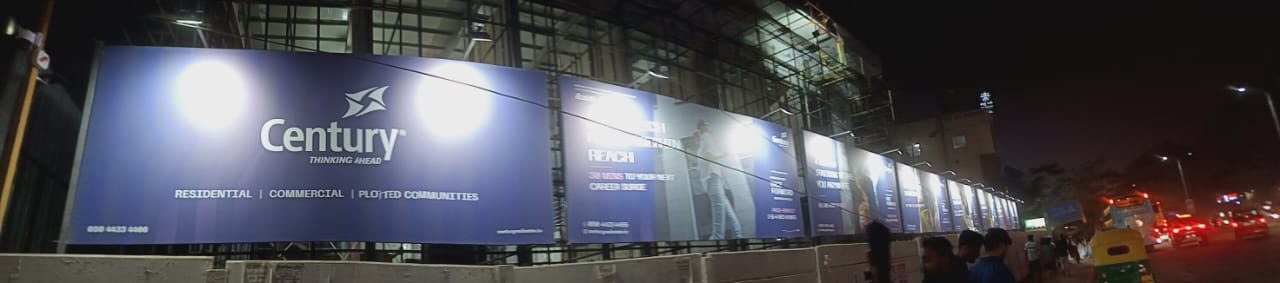
What Sets Sky Signs Apart from Regular Signage
Scale and mounting position are the two defining features. A sky sign is built and structurally engineered to sit high on a building, often visible from hundreds of metres away, which means it needs a stronger support structure, wind-load engineering, and typically brighter or larger illumination than street-level signage.
Construction and Materials
Sky signs are usually built on a steel or aluminium frame structure for strength, faced with ACP, acrylic, or a flex/vinyl panel, and illuminated with LED modules or, for larger installations, floodlighting. The supporting structure and its anchoring to the building are engineering-critical — this isn't a DIY-scale sign.
Approvals and Structural Considerations
Given their size, height, and wind exposure, sky signs typically require structural safety sign-off and municipal/BBMP approval in Bangalore before installation — this is a genuinely different regulatory category from a standard shop fascia board, and worth planning for well ahead of the installation date.
When a Business Should Consider a Sky Sign
Businesses on highways, near flyovers, in commercial towers, or anywhere brand visibility from a distance genuinely matters more than close-up detail — a sky sign is built to be read from far away, not to carry a lot of fine text.
For large-format print behind rooftop signage, see our HP latex printing page, or read about what affects signage cost at this scale.
FAQ( 01 )
The terms overlap in everyday use, but "sky sign" generally implies a permanent, illuminated, structurally engineered installation tied to a specific building or brand, rather than a rented hoarding/billboard space.
Given their height, size, and structural load, sky signs typically need both structural safety clearance and BBMP/municipal signage approval — this is more involved than approval for a standard shop board.
ACP or metal-framed acrylic panels with weatherproof LED illumination are the standard choice, engineered specifically to handle continuous wind and weather exposure at height.
Given the structural engineering, approvals, and fabrication involved, sky signs take considerably longer than street-level signage — planning several weeks to a few months ahead is realistic.
Almost always, since their purpose is distance visibility, which matters as much or more after dark as during the day.
Periodic structural and electrical inspection is important given the height and wind exposure — we recommend a maintenance check at least annually, more often after severe weather.
Not easily — because it's structurally engineered for a specific mounting point and load, a sky sign is generally a long-term, fixed installation rather than something moved or resized casually.